
What is sustainable trail building? We are all familiar with the concept of sustainability—systems which can last over time—a term most often used in regards to the human relationship to the environment, society and economy.
In relation to trails, building or modifying a trail to be sustainable can look alot different depending upon where the trail is and what pressures it is being exposed to. On the trails NorthWoods most frequently works on here in the Northeast Kingdom of Vermont, some of the largest pressures to consider are impacts from water and from human traffic.
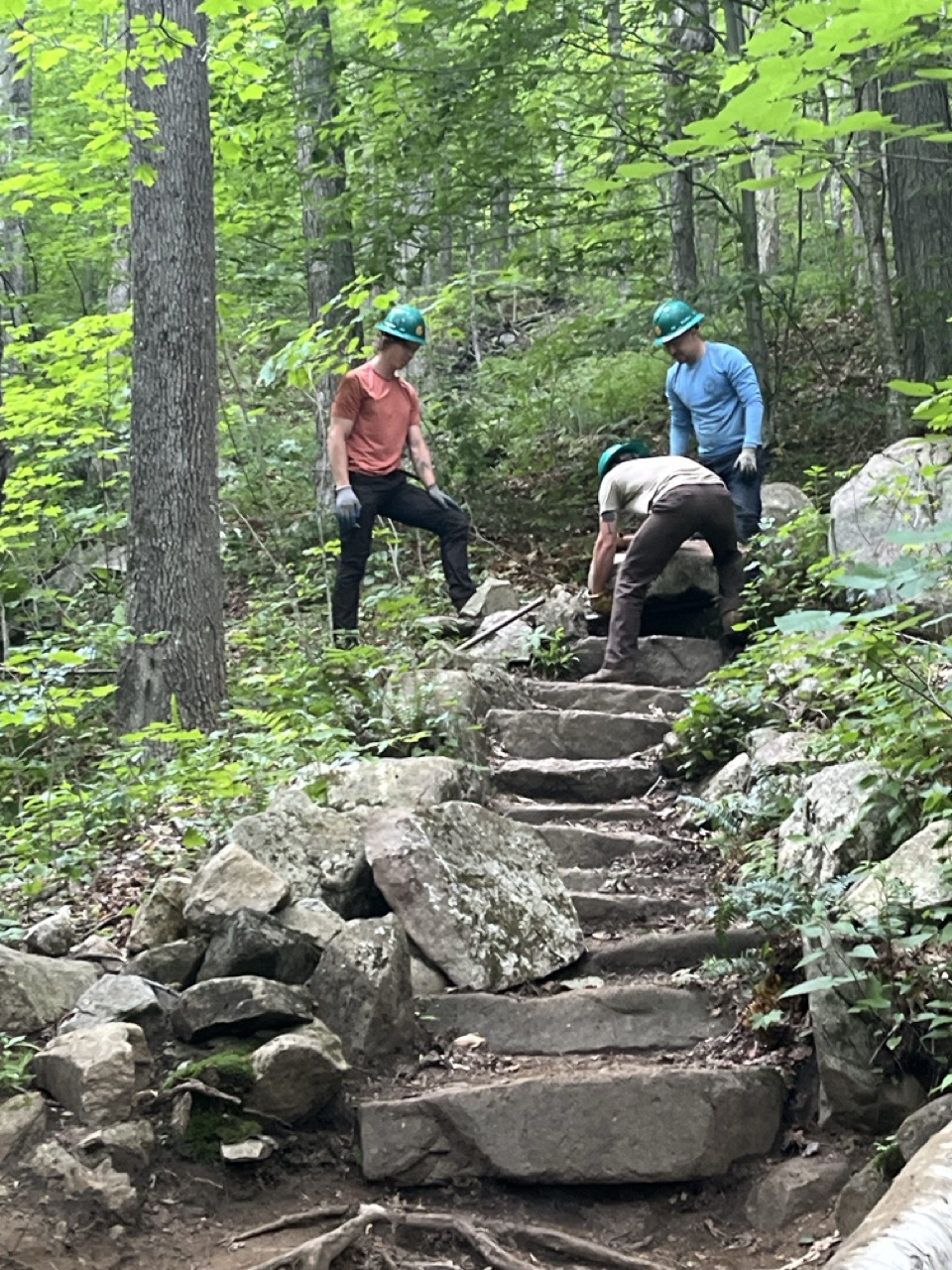
Staircase on Mt Pisgah South Trail.
This summer, our crews have been working in partnership with the State of Vermont, on improvements to a number of popular local hiking trails. Historically, trails created by European colonists here in the eastern United States were built straight up the mountains. While following a straight line may be the quickest way for a human to reach the top of something, it is also the quickest way for water to flow down. The quicker water flows, the more material, such as soil and rocks, it takes with it, eroding the pathway until it basically becomes a seasonal streambed, and eventually impassable.
Improving sustainability on trails like this looks like getting rid of those straight lines—something that also happens to improve the experience for humans! Going straight up a mountain may be quick but it is strenuous. By following a curvilinear route that incorporates grade reversals in place of straightaways, water can be drained off to the sides of the trail, and slowed down by natural forest debris—allowing it to infiltrate into the soil instead of rushing down bare paths and causing erosion damage.
This work has been most prominently on display at the Mt Pisgah South Trail – one of the most popular trails in our region, with dramatic overlooks of Willoughby Lake, and visited by thousands of hikers each year. Human traffic is a powerful erosive force in itself, and impacts are multiplied during rain events, so improvements to popular trails can make a big difference in the long term health and viability of the pathway and the surrounding forest’s health. NorthWoods adult and youth crews have been implementing some of those sustainability improvements this summer. Successful modifications mean the trail will be more curvy—following the the contour of the slope instead of heading straight up, and using switchbacks to gain elevation. Additionally, rock staircases (above right) have been improved, and grade reversals installed to help redirect water off the trail and back into the surrounding forest.
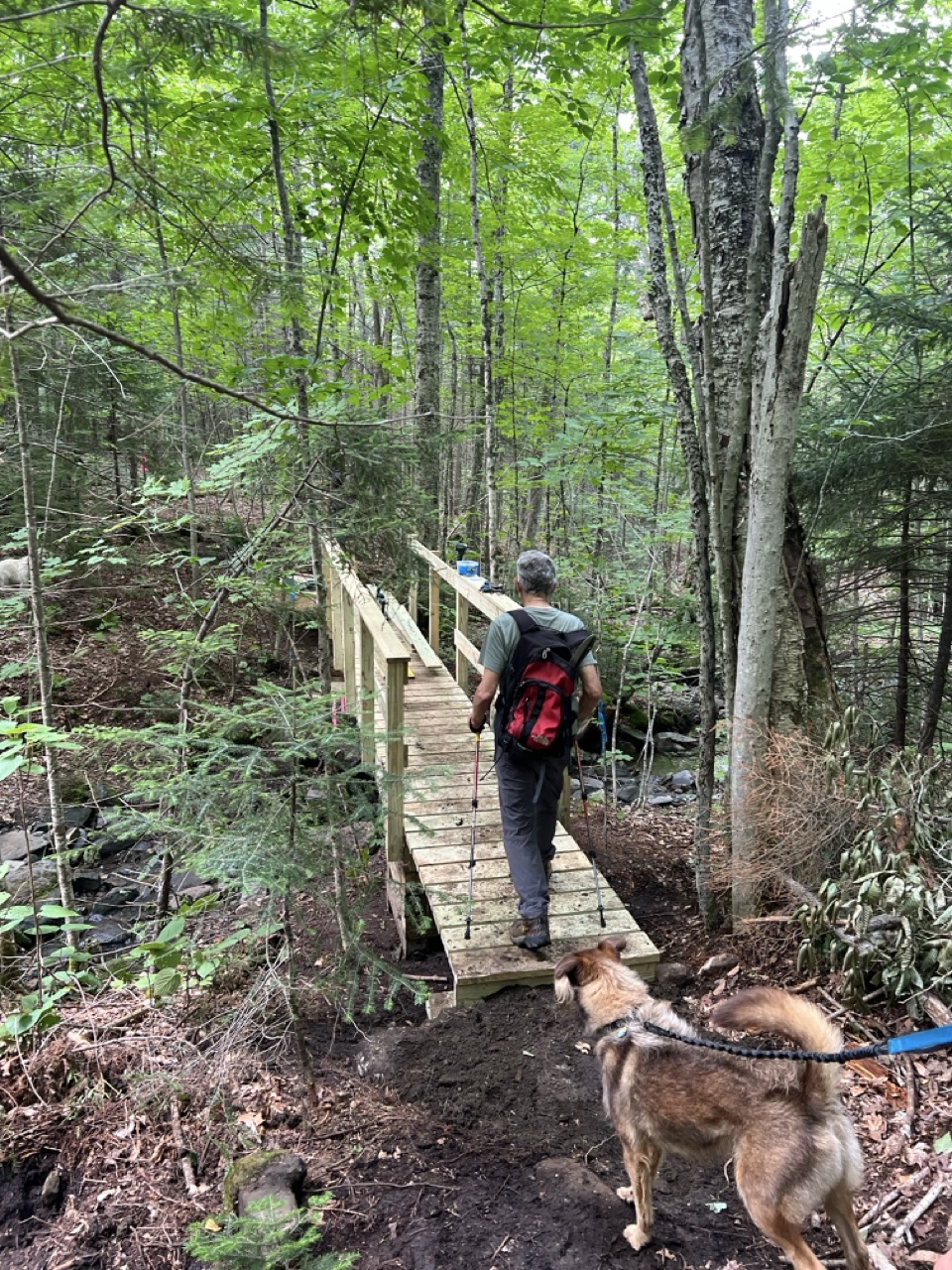
New, high-set bridge at Scott’s Trail Loop, Sentinel Rock State Park, under construction.
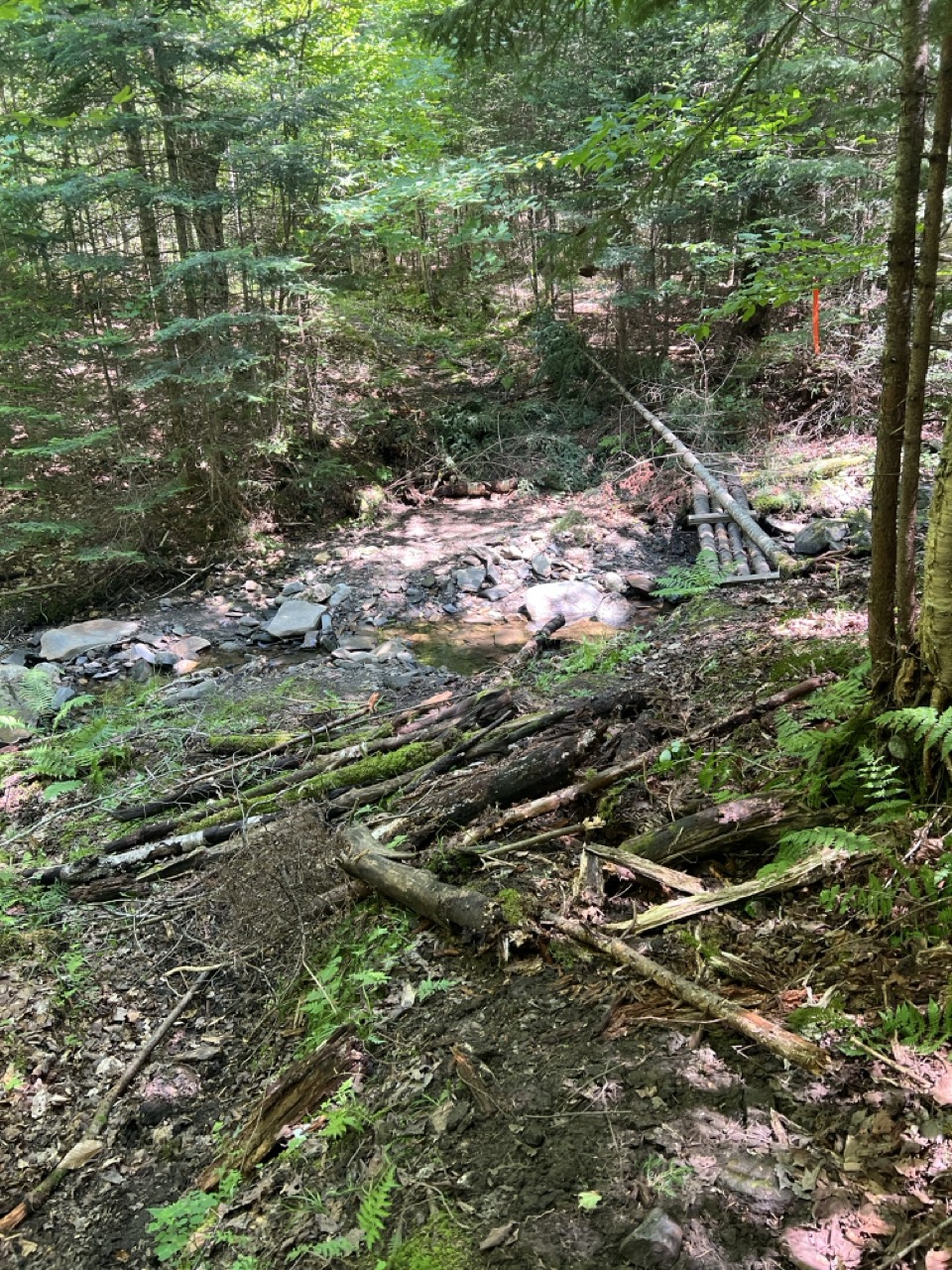
Was there even a bridge here? The old crossing on the Scott’s Trail Loop, with remnants of a corduroy bridge.
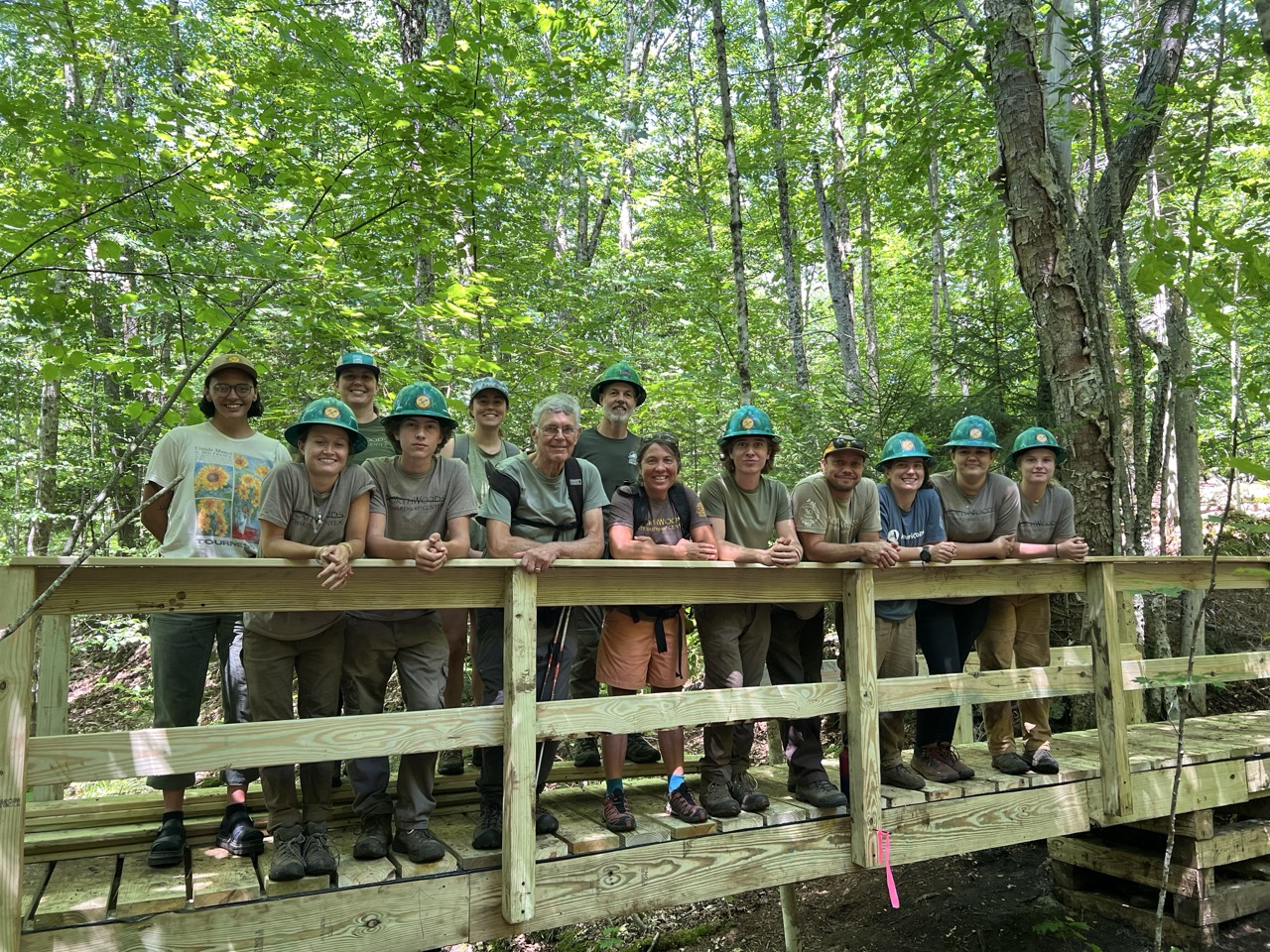
In a second example of sustainability in action, partners from Serve Learn Earn, the Westmore Association, the Green Mountain Club, and VT Forests, Parks & Recreation recently visited a NorthWoods project site at Sentinel Rock State Park, a quiet spot with stunning views, which offers a variety of trail types for visitors, ranging from a short ADA accessible trail out to the namesake glacial erratic, to an easy field walk or an interesting woods trail loop.
NorthWoods youth crews have been working on improvements to the woods trail (Scott’s Trails Loop) for the past few weeks, including installing re-routes and switchbacks on steeper terrain, and building a brand new foot bridge over a stream gully. The old bridge was a ‘corduroy’ logging bridge—built by roughly laying logs next to each other perpendicular to water flow—a temporary solution for getting machines across rivers, but ineffective over time and a poor choice for the river or as as a safe foot bridges.
The new bridge was relocated to an area of high ground, at a narrow spot over the river, and at 25 ft, is quite long for a trail bridge! Even with that considerable span, Corps Director Dusty May and Luke O’Brien from VT Forest Parks & Recreation were cautious about the design and placement – something that sometimes sparked questions amongst the crew. Why such a large bridge? Recent flooding events have made it all too clear that even small streams need plenty of space to expand during high water events. With that concept of sustainability in mind, the youth crew built this bridge to specs: high-set and sturdy, and with their hard work and a little luck, it will be supporting hikers for many years to come.
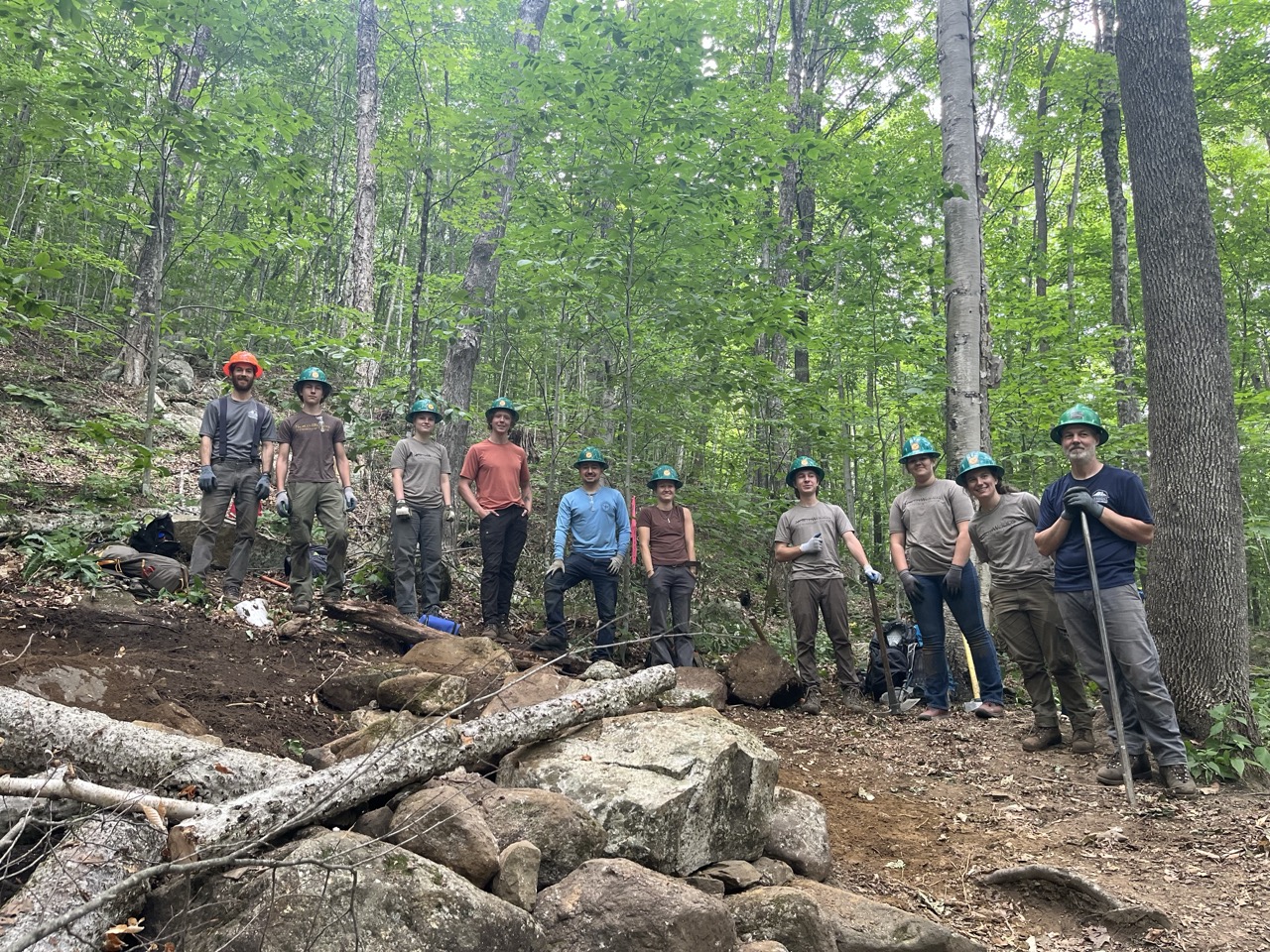
A NorthWoods YCC crew works on a trail re-route at Mt. Pisgah South Trail, with staff from VT Forests, Parks & Recreation.