
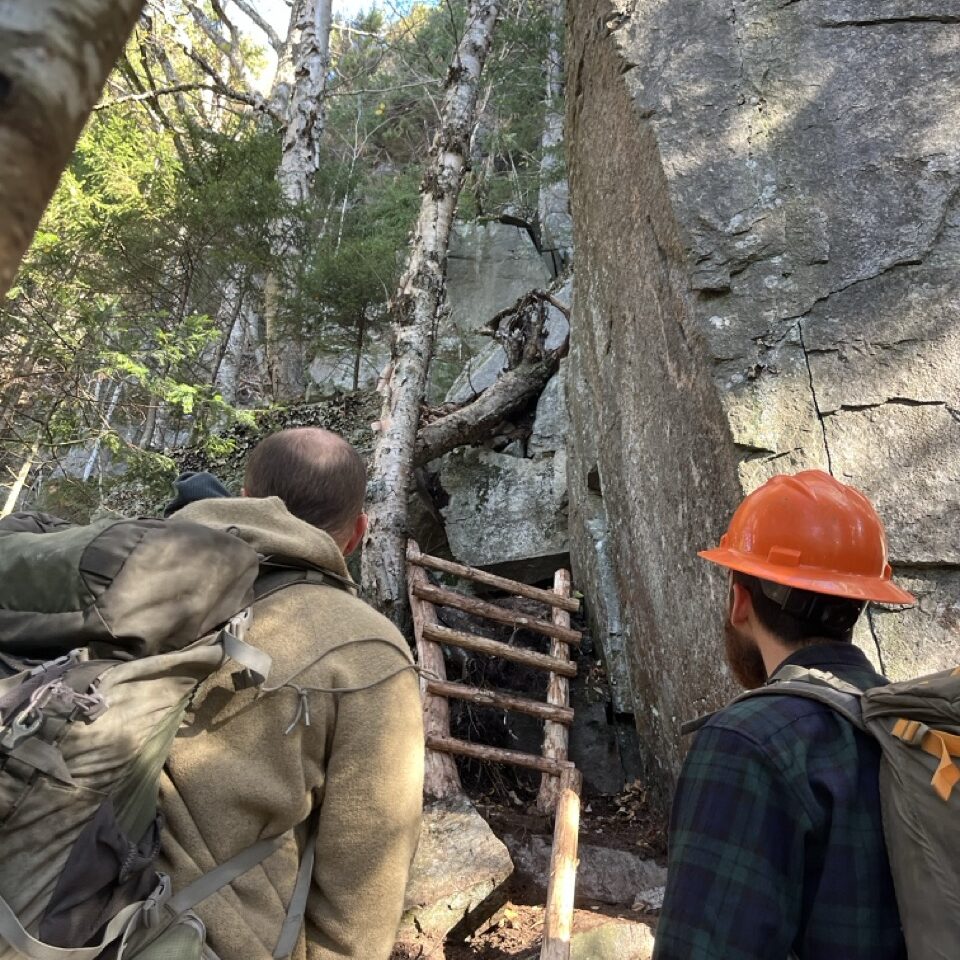
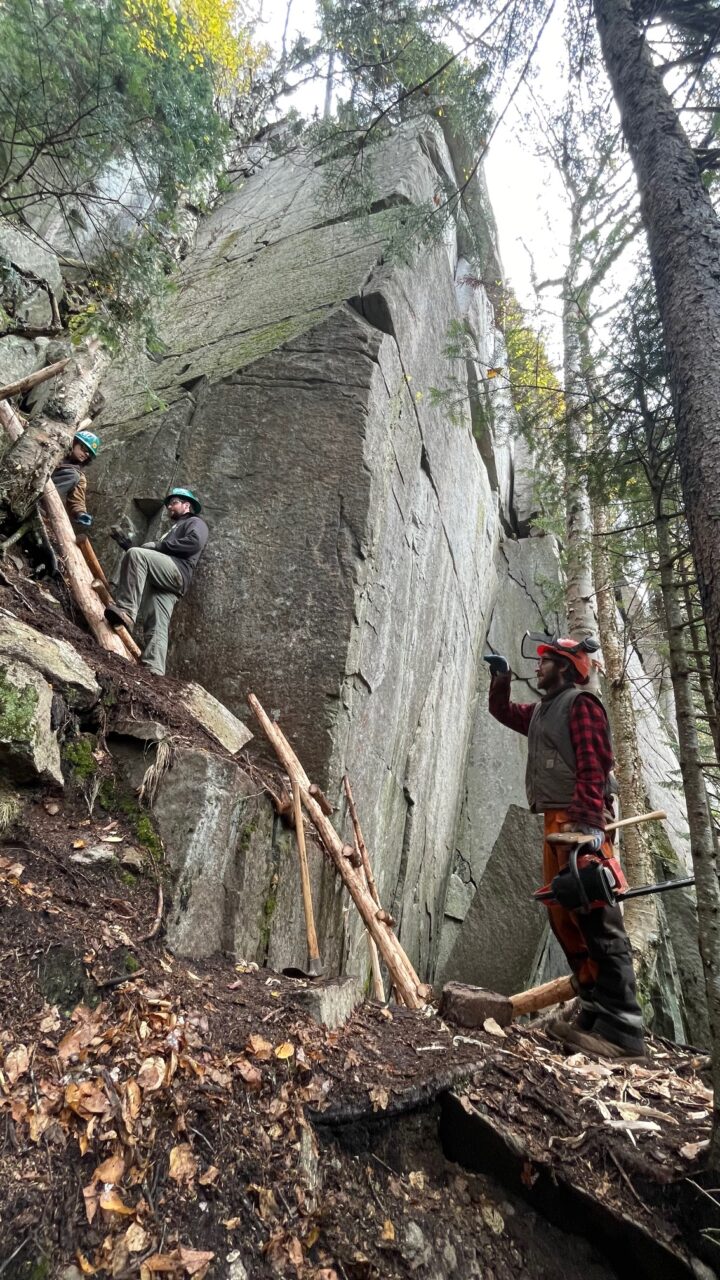
 Last October we reported on the first stage of work done by our crews on the access trail to the base of the climbing area on Black Mountain in Averill, VT. This October, our Conservation Corps Professional Trail Crew finished their 2025 season completing the final stages of this unique and collaborative access trail.
Black Mountain is located in the Kingdom Heritage Lands, on property owned by Weyerhauser, and is especially unique not only because of its location but also because of the geology, and unique recreational opportunities, the mountain has to offer.
One of the distinctive elements of the Northeast Kingdom landscape is the occurrence of intrusive granite—a rock that has more in common geologically with the dramatic mountains of New Hampshire than the rest of Vermont. Formed when magma surged through cracks in the existing rock and cooled into granitic plutons, these structures are dotted along the eastern edge of the state, from Dummerston in the south to Averill in the north. This rock formation is especially prevalent in our region – composing many of the NEK’s iconic mountains like Wheeler, Pisgah, Bald as well as the lesser-known Black Mountain.
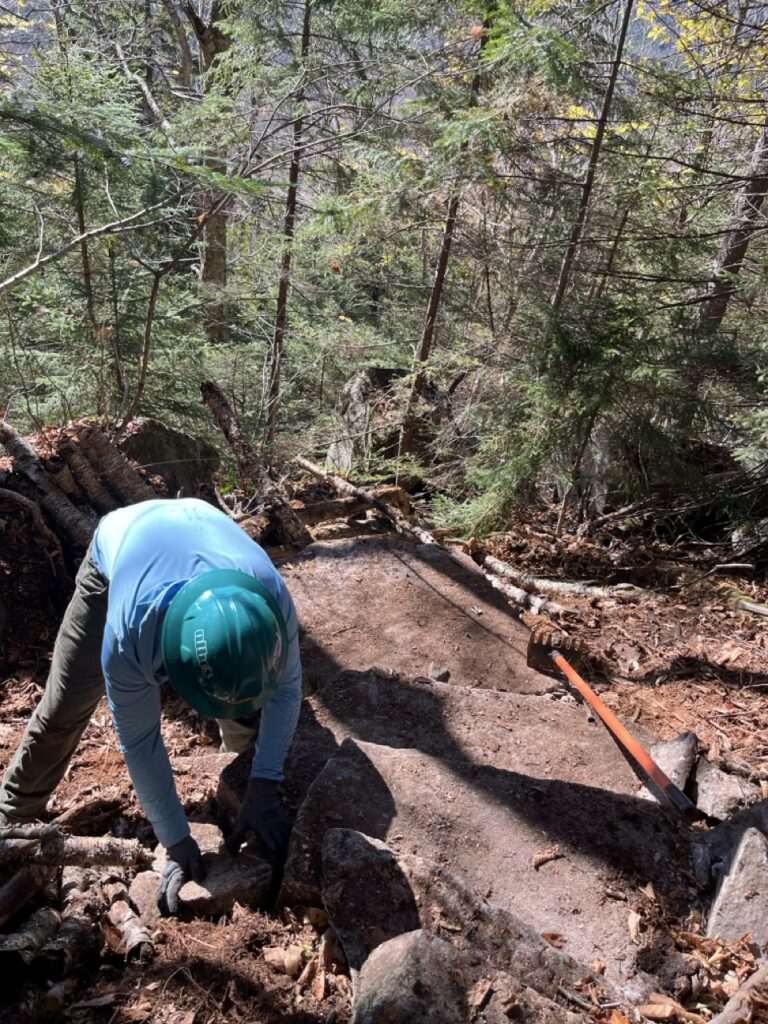
While this remote area has primarily been utilized by snowmobilers and hunters, within the past twenty years Black Mountain has become a destination for rock climbers who have established 40+ routes up the face of the mountain which provides exceptional crack climbing.
CRAG-VT, a non-profit climbing resource and access group, recently completed a climbing management plan and received designation as a Recreation Corridor Manager for climbing activities at Black Mountain. This important step established rock climbing as an acceptable form of recreation on the Kingdom Heritage Lands and empowered CRAG-VT to work with partners at VT Forests Parks & Recreation, and with NorthWoods, to develop a plan to both protect the land and ensure climber access to this area into the future.
The Corps Pro crew had the opportunity to do extensive work on the access trail and at the belay sites, focusing on efforts to make these areas more sustainable so that they can last the test of time and ongoing use.
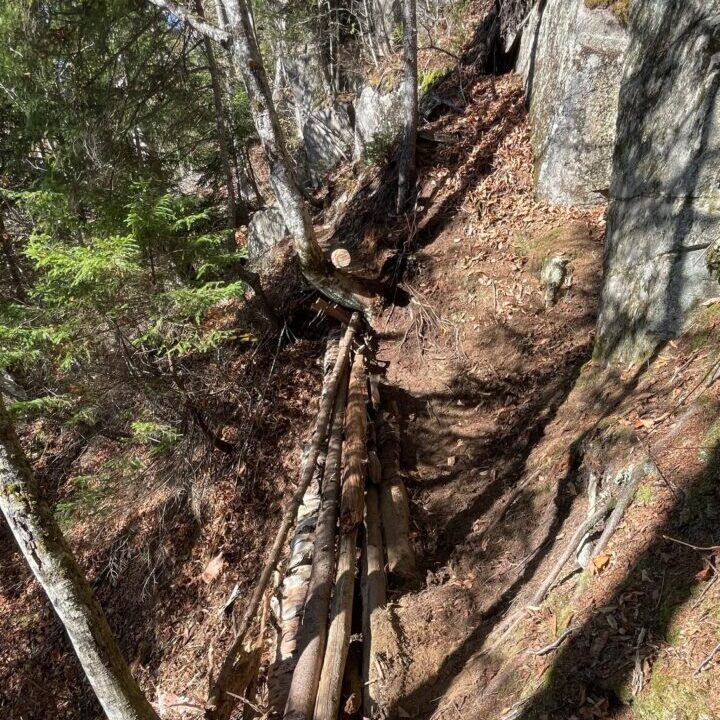 The rugged and steep terrain was especially challenging to work in, and the lack of the usual soils and materials available during normal trail building meant that our Crew had to be creative and especially careful to minimize our impact by not disturbing roots holding existing soils in place.
In some areas the crew had to use a form of German permaculture practice known as Hugelkultur (a century old tradition of building garden beds using logs and plant debris). Our crews had to utilize coarse woody debris in order to retain trail tread in areas where setting stone was impossible, impractical or unavailable. This method will allow the logs and natural debris to rot and settle, becoming soil for future plants and trees to establish in the hopes to boost the ongoing cycle—building and retaining more soil into the future.