
If you find excitement watching grass grow, you might get really excited watching trees grow! As we manage the NorthWoods Demonstration Forest, we have to think in “forest time,” understanding that trees can live for hundreds of years and ecological processes can take decades, centuries or longer to unfold. In forest time, most of our Demonstration Forest is still very young. Last summer and fall we worked in one of these young stands of ~40 year old hardwood trees that started growing after heavy logging in the 1980s.
NorthWoods manages our Demonstration Forest to support multiple uses and values, including ecological function, wildlife habitat, recreation, and production of forest products. Our recent project was thinning 10 acres of young hardwood forest to enhance future wildlife values and timber value. We used practices of “mast tree release” and “crop tree release,” a great fit for young forests, and something we’ve helped many landowners do in their woods. This management strategy identifies high-quality trees and removes other lower-quality trees around them, to promote health and growth. This thinning is called “releasing” the preferred trees from competition. Think of it like thinning carrots in your garden, except bigger, and using chainsaws instead of gardening gloves!
How do we choose trees to release? In this area, we focused on two goals: wildlife habitat and timber value. To enhance wildlife habitat, we released “mast trees.” In this context, “mast” is a term for wildlife food, including berries and nuts that grow on trees. Preferred mast species include black cherry, American beech, and various other seed/berry producing trees. We don’t always think about trees as a food source, but animals do! To enhance future timber value, we also chose “crop trees” that have good quality trunks, and can be grown for another 40-60+ years and then harvested to produce valuable wood products. Examples of high-value crop species include yellow birch, sugar maple, and many others.
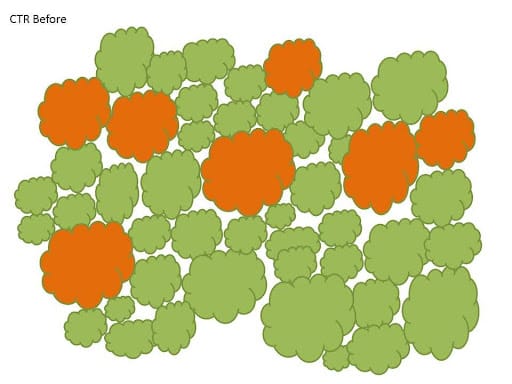
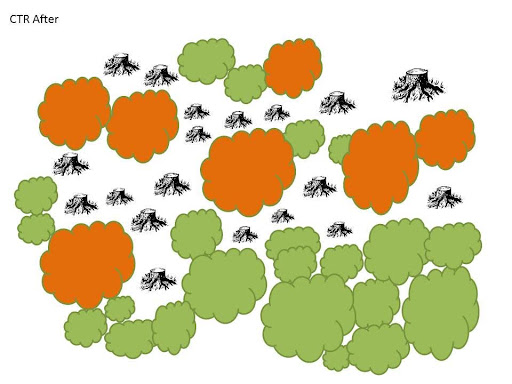
Projects like this are considered “pre-commercial” forestry, meaning that there is no immediate income from forest products. All the trees that are cut are left on the ground, or sometimes harvested for firewood. Pre-commercial work requires an input of time and labor, and NorthWoods was able to partially fund this work with a cost-share from the USDA Natural Resources Conservation Service (NRCS) Environmental Quality Incentives Program (EQIP). This NRCS cost share, as well as several other programs, are available to most private landowners.
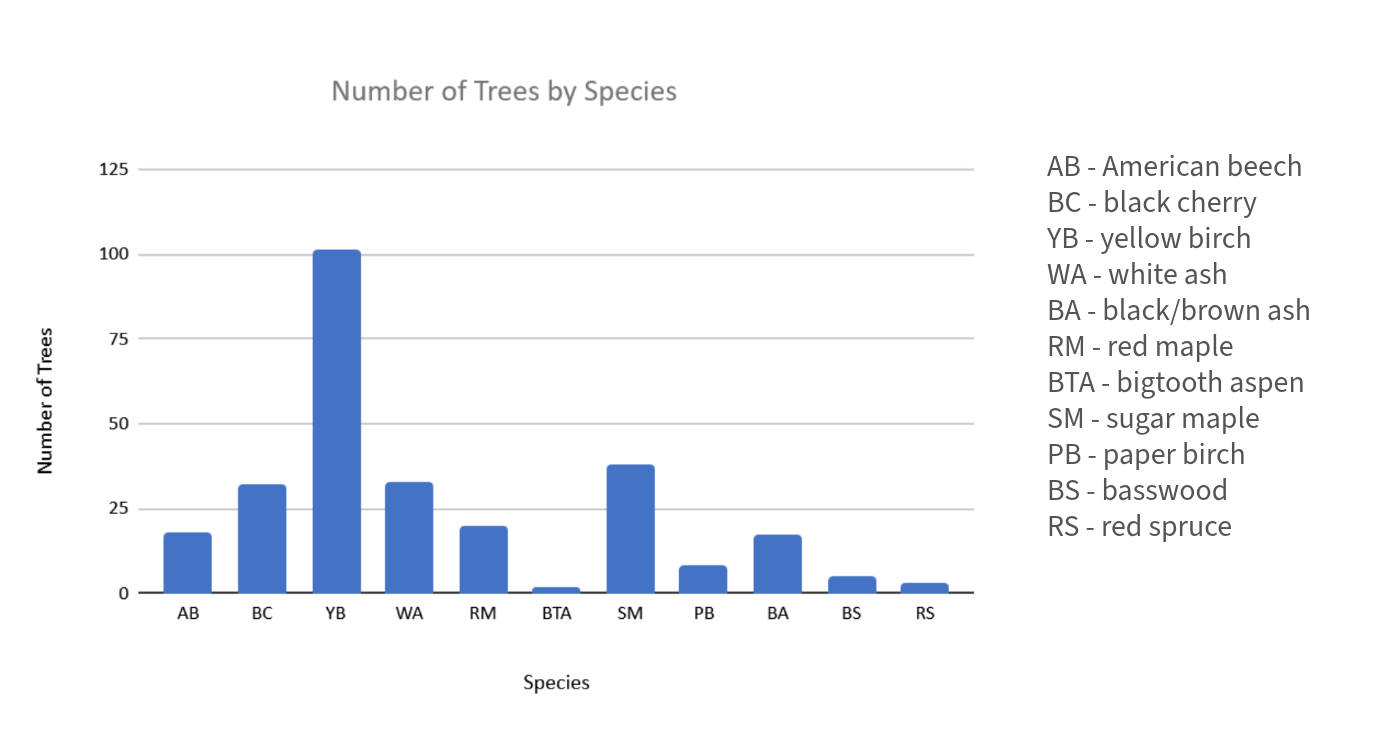
NorthWoods forestry interns flagged mast trees and crop trees last summer, and painted trees to cut. This crew of chainsaw-trained interns would have been ready to jump right into cutting trees, but we had to wait a few months. One of the NRCS requirements (and a goal of NorthWoods) is to protect habitat for nesting birds and roosting bats. Cutting trees during spring, summer and early fall can impact those species, making it advisable to cut trees in late-fall or winter when possible. We completed the chainsaw work in November-December with our year-round staff and one long-season forestry intern. Ten acres may sound small, but this thinning was a lot of work; we released 307 trees (cutting many more!), with a graph below showing the proportion of different species.
There are always surprises when working in the woods! Our first surprise was the early snow in November. While this slowed us down a bit, it’s hard to complain about work days in a winter wonderland.
The second surprise was even more exciting. When we started work on this project, spending many days in the 10-acre area, we found many more black ash trees than we expected. Black ash (also called brown ash) is a native tree that grows in wetlands and seepages. It is a unique species, somewhat uncommon due to it’s specific wetland habitats, and has cultural importance to indigenous basket makers. Black ash is at risk of extirpation from the destructive emerald ash borer (EAB), an insect pest that has been spreading into the northeast but has not yet been found in Charleston, VT. The stand we were working in has small seepage areas, just enough to support black ash, and the trees look great! We released 20 black ash trees, and are pursuing funding to continue this work to promote black ash, and to monitor health of trees as EAB gets closer.
Want to learn more? NorthWoods crews and consulting foresters can work with you to do pre-commercial thinning or similar projects on your land. You can also check out this site in the NorthWoods Demonstration Forest, located along the Neighborly Way trail. Please note that this trail is relatively new, ungroomed, and may be difficult to navigate.
Contact us at [email protected] to learn more.
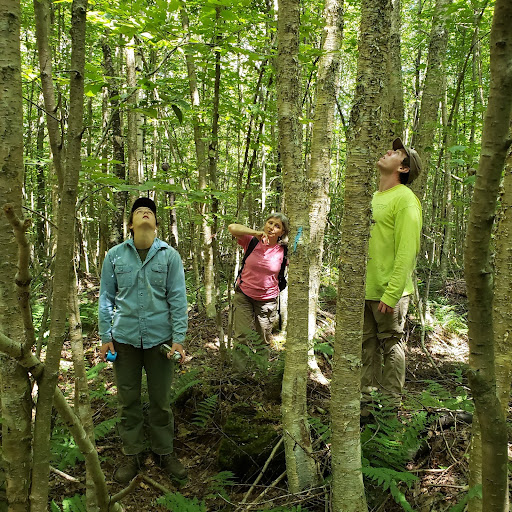
Foresters get sore necks, but you’ve got to look up! A not so flattering photo of forestry interns Kaisa and Wyatt working with forester Jenny to choose mast/crop trees
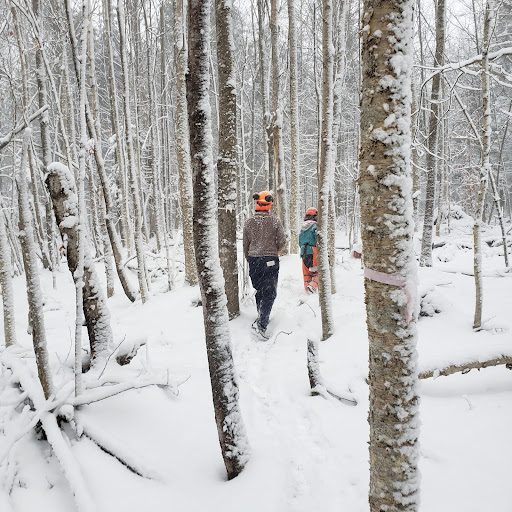
Kaisa and Jenny hiking into the site. Winter came early! Light-pink flagging indicates mast/crop trees
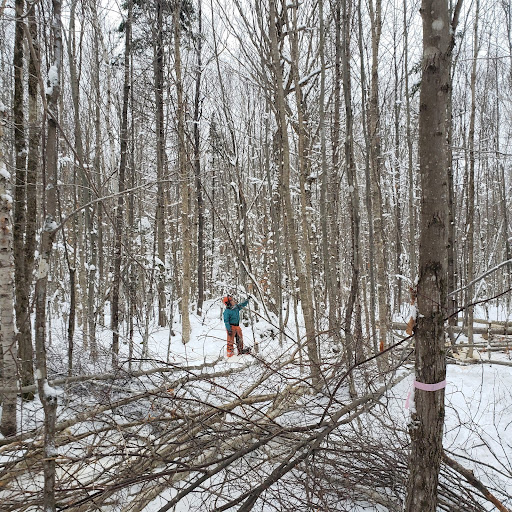
Messy is good, when you’re a forest! Jenny in the thick of a work day, pointing out the next tree to be cut